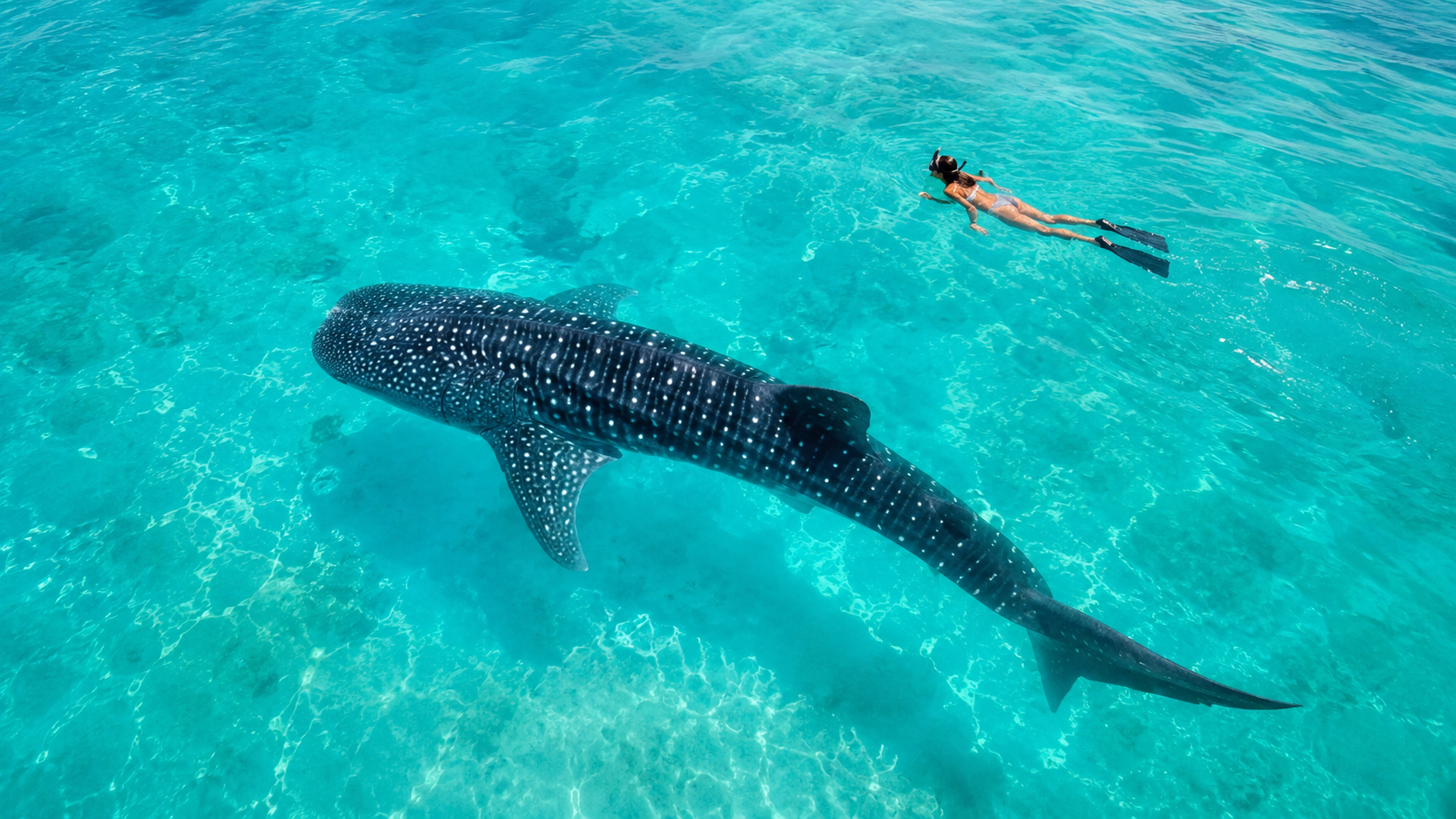
Swimming with Whale Sharks in Holbox, in One Answer
In 2026 the official whale shark season around Holbox runs from May 15 to September 17 — some operators start June 1 and close September 16 — and the surest time to swim is the July–August peak, when the biggest numbers of these gentle giants gather in the plankton-rich waters near Isla Contoy, about 20 km east of the island. Whale sharks are the largest fish in the ocean and completely harmless: they filter-feed on plankton, so a "swim" means snorkeling calmly beside a slow-moving giant, never diving with a predator. Holbox is the classic launch point because the boats reach the feeding zone quickly, and the whole thing is tightly regulated to keep the animals safe. If you are building a trip around this, aim for the peak weeks, book a small-boat tour, and give yourself an early start. Here is how it actually works, from someone who knows this coast.
The Season: Mid-May to September, Peak in July–August
The gathering is seasonal and weather-dependent, not a year-round attraction. The official window in 2026 is May 15 through September 17, though many operators run a slightly tighter calendar of June 1 to September 16. Either way, the sweet spot is July and August, when warm water and blooming plankton draw the largest aggregations and sightings are at their most reliable.
Early and late in the season the numbers are lower and the sea can be less predictable, so if this experience is the reason for your trip, plan your dates inside the peak rather than at the edges. It is a wildlife encounter, which means nothing is ever guaranteed — but during the peak weeks, well-run tours have excellent odds of finding several animals in a single morning.
What the Tour Is Like: Early Start, Small Boat, Two Hours in the Water
Tours leave early — most boats push off around 6:30 a.m. to reach calm water and beat the midday chop — and the full outing runs about six to seven hours round trip. You will be on a small boat, typically carrying just 8 to 10 people, which keeps the group manageable and your time in the water personal rather than crowded.
The feeding zone sits roughly 20 km east of Holbox, out near Isla Contoy, so there is a boat ride each way before the action begins. Once the crew spots the sharks, guests enter the water in pairs with a certified guide, taking turns so the group cycles through several swims over roughly two hours of actual in-water time. Between swims you rest on the boat, watch for the next dorsal fin, and often catch dolphins, rays, or sea turtles along the way. Bring your snorkel gear or use the boat's, and expect a wet, sun-drenched, unforgettable morning.
The Rules That Protect the Animal
This is one of the most strictly regulated marine encounters in Mexico, and that is exactly what keeps it sustainable. The core rules are simple and non-negotiable: you never touch the whale sharks, you keep a respectful distance, and you always stay with a certified guide — only two swimmers plus a guide are allowed alongside an animal at a time. No sunscreen chemicals that harm marine life, no flash that startles them, no chasing or blocking their path.
Choose an operator that follows these protocols. A good crew will brief you thoroughly before anyone gets in, cap group sizes, and put the animals' welfare first — that is not red tape, it is the reason these giants keep returning to Holbox each season.
How to Get to Holbox from Cancún
Holbox is car-free, so the journey ends with a ferry, not a parking lot. From Cancún, it is roughly two to two and a half hours total: drive or take a shuttle north to the port town of Chiquilá, leave the car behind, and cross to the island on the passenger ferry over the lagoon.
Once you land, golf carts and bikes take over — there are no cars on the sandy streets. Because tours depart so early, most people sleep in Holbox the night before rather than attempting the whole thing from Cancún in one predawn push. Staying on the island the night prior turns a stressful 4 a.m. start into a relaxed walk to the dock.
What to Bring and Timing Tips
Pack a swimsuit under your clothes, a towel, a hat, a light layer for the breezy boat ride, and reef-safe sunscreen (or a rash guard instead of chemicals). Bring seasickness tablets if you are prone — the open-water ride can get bouncy. Have your own mask and snorkel if you like a guaranteed fit, though boats provide gear. Waterproof your phone or camera, and carry a little cash for tips and extras.
Book during the July–August peak for the best odds, choose a small-boat, certified operator, and stay in Holbox the night before your tour. Go early in your trip so you have a backup morning if the sea is rough on your first attempt.
FAQ
When is whale shark season in Holbox in 2026? Officially May 15 to September 17, with some operators running June 1 to September 16. The peak — and the most reliable time to swim — is July and August.
Where do you swim with the whale sharks? In the feeding zone about 20 km east of Holbox, near Isla Contoy, where plankton draws the animals. Boats ride out from the island each morning.
Is it safe to swim with whale sharks? Yes. Whale sharks are gentle plankton-feeders, not predators. You snorkel beside them in pairs with a certified guide, never touching them, under strict regulations.
How do I get to Holbox from Cancún? Drive or shuttle about two to two-and-a-half hours to Chiquilá, then take the ferry across the lagoon. Holbox is car-free, so you get around by golf cart or bike.
---
Swimming beside a whale shark is the kind of morning that makes people fall for this corner of Mexico and quietly wonder what it would be like to stay. Kev is the local who knows the season, the good operators, and the little timing tricks — like sleeping in Holbox the night before — that make the trip land right. If you want honest, on-the-ground guidance from someone who calls this coast home, say hello here.